Sewing Doodles Font for Creative Projects
As I sat down to redesign the header for my lifestyle blog, I found myself searching for a font that felt both personal and professional. Something that could carry the warmth of handmade crafts while still looking polished on screen. That’s when I discovered Sewing Doodles—a unique dingbat and doodle font that brings a touch of whimsy to any editorial project.
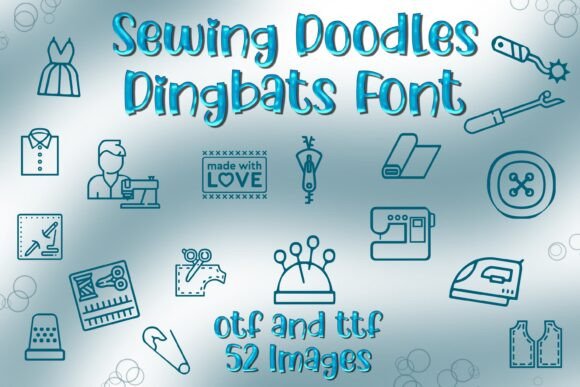
The font features 26 capital letters and 26 small letters, each crafted with a soft, hand-drawn aesthetic. It’s not just a typeface; it’s an invitation to slow down, to appreciate the little details, and to infuse creativity into every word. Whether used in a blog title, a newsletter graphic, or a printable guide, Sewing Doodles adds a tactile quality that feels almost like a handwritten note from a friend.
What makes Sewing Doodles stand out is its balance between playful and professional. The letterforms have a gentle rhythm, with subtle variations in stroke weight that give them character without sacrificing clarity. This makes it ideal for projects where you want to maintain a sense of approachability while still delivering a strong visual identity.
I first tested Sewing Doodles on a recipe ebook cover. The font’s organic flow complemented the warm, inviting tone of the content. It worked especially well as a headline, drawing the eye while maintaining readability. When paired with a clean serif font for the body text, the contrast created a harmonious design that felt both modern and nostalgic.
For a wedding guide I was designing, Sewing Doodles proved to be a perfect fit for section headings and pull quotes. Its decorative yet legible nature made it easy to use in multiple places without overwhelming the reader. I also found it effective for chapter openers, where its distinctive style helped signal a new section while keeping the overall layout cohesive.
One of the things I appreciate most about Sewing Doodles is how it supports visual hierarchy. Its bold, stylized letters make it ideal for titles and headers, while its softer forms allow it to work in smaller, more subtle applications like captions or decorative accents. This versatility means it can be used across a wide range of editorial formats—from digital magazines to printable planners—without losing its charm.
When working on a coaching workbook, I used Sewing Doodles for the title page and key sections. The font’s personality helped reinforce the theme of self-expression and creativity, making the content feel more engaging. It also worked well in combination with a sans serif font for instructions and step-by-step guides, creating a balanced and readable layout.
Readability is always a concern, especially when using a display font. Fortunately, Sewing Doodles maintains good legibility even at smaller sizes, making it suitable for web-based content, PDFs, and print materials. Its consistent spacing and clear letterforms ensure that it remains accessible across different mediums, whether readers are scrolling through a blog on their phone or flipping through a printed guide.
For those looking to incorporate Sewing Doodles into their designs, it’s worth exploring the available styles and alternates. The font includes a range of variations that allow for creative expression without compromising structure. These options can be particularly useful when designing logos, social media graphics, or packaging, where a custom look is desired.
When pairing Sewing Doodles with other fonts, the goal is to create a visual balance that enhances rather than distracts. A classic serif font like Georgia or Garamond can provide a strong foundation for body text, while a modern sans serif like Lato or Open Sans works well for captions and navigation elements. This kind of pairing ensures that the design remains both functional and aesthetically pleasing.
Before using Sewing Doodles in commercial projects, it’s important to check the licensing terms. The font is available in both OTF and TTF formats, making it compatible with a wide range of design software. Whether you’re creating an ebook, a downloadable template, or a paid newsletter, having the right license ensures that your work remains compliant and protected.
Ultimately, Sewing Doodles is more than just a font—it’s a tool for storytelling. Its unique character invites readers to connect with the content on a deeper level, whether they’re reading a blog post, flipping through a recipe book, or completing a printable worksheet. In a world where typography often goes unnoticed, Sewing Doodles reminds us that the right font can transform the way we experience words.
As I continue to explore its potential, I’m excited to see how it can enhance future projects. From blog headers to digital magazines, there’s something undeniably special about a font that feels both thoughtful and fun. For anyone looking to add a touch of creativity to their design work, Sewing Doodles is a must-try.